
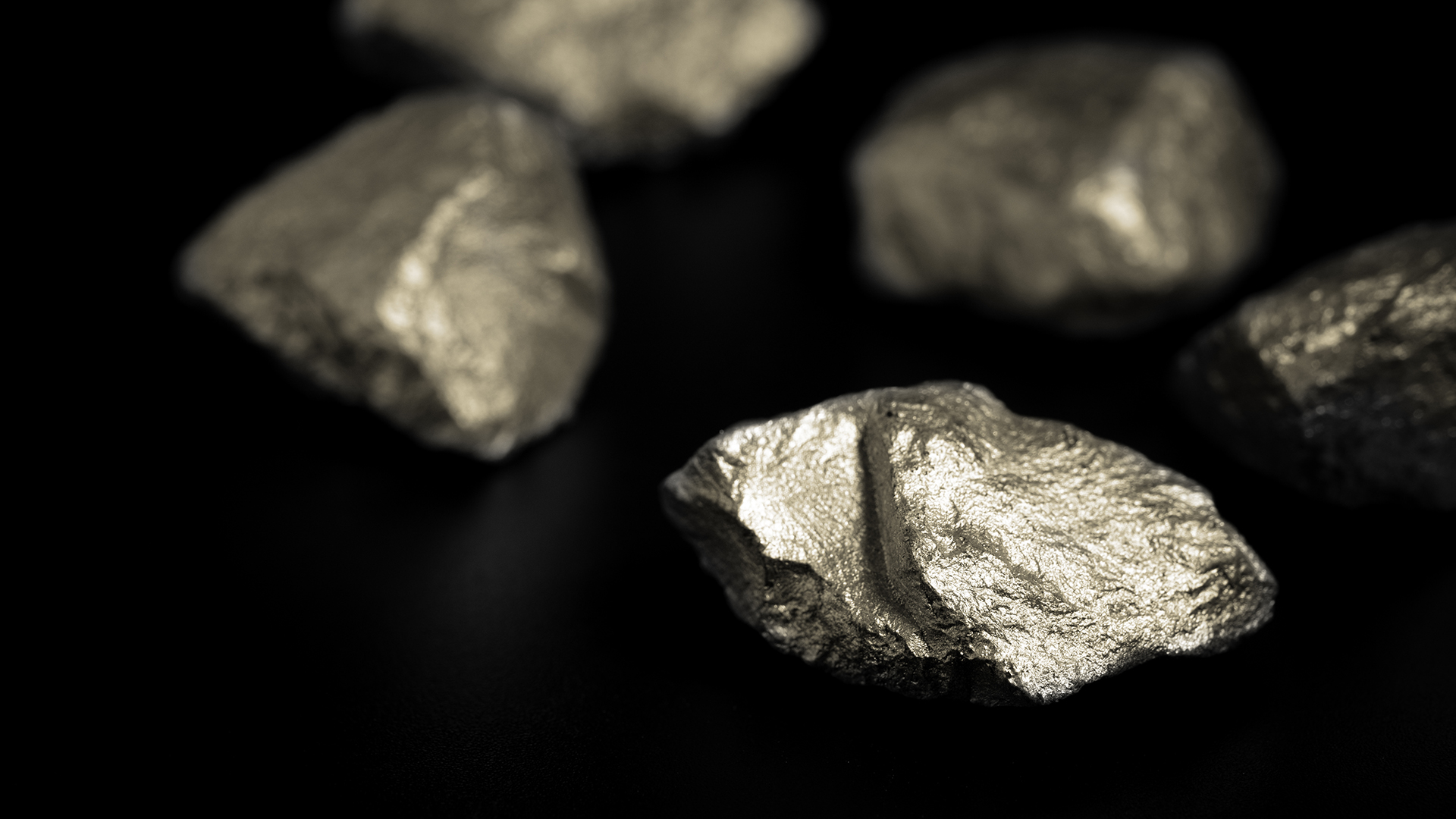
Announced by President Trump in February 2026, Project Vault is designed to shield manufacturers and the defense industrial base from supply disruptions. Its financing combines a $10 billion Export-Import Bank loan—the largest single financing in the agency’s 92-year history—with about $2 billion in private capital from companies including General Motors, Boeing, Google and Stellantis. The plan covers all 60 minerals on the USGS 2025 Critical Minerals List, with initial emphasis on 15 rare earth elements.
The article argues that raw rare earths, including separated oxides, are not ready for manufacturers to use. They must be converted into high-purity metals, alloyed to precise specifications and made into permanent magnets. China accounts for about 90% of global rare earth processing and a larger share of finished magnet production, the article says. It cites the Center for Strategic and International Studies’ assessment that metallization is among the hardest processing capabilities to rebuild outside China.
The article traces the decline of Western processing to competition with Chinese producers, whose lower costs were supported by state backing, minimal environmental controls and cheap labor. It says North American and European operations closed over time and that the last major U.S. rare earth mine, Mountain Pass in California, closed in 2002. Beyond facilities, the author says, the expertise and equipment needed to separate and process the elements also disappeared.
REalloys, traded on Nasdaq as ALOY, is presented as a possible link between stockpiled materials and finished products. The company’s Euclid, Ohio, facility has worked on contracts with the Defense Department, Energy Department and NASA, according to the article. It says REalloys has an exclusive 80% offtake on neodymium-praseodymium (NdPr), dysprosium (Dy) and terbium (Tb) production from the Saskatchewan Research Council’s facility in Saskatoon. That plant is targeting first commercial production by early 2027. The article also cites feedstock agreements in Saskatchewan, Wyoming, Appalachia, Kazakhstan, Brazil and Greenland, and a letter of intent for a partnership with South Korean magnet maker JS Link.
The article says new Pentagon procurement rules take effect on January 1, 2027, restricting Chinese-origin rare earth materials in U.S. weapons systems. REalloys is expected to receive high-purity oxides from SRC for qualification as early as the fourth quarter of 2026. The U.S. Army has selected the company to negotiate over building and operating processing facilities at Tooele Army Depot in Utah, according to the article; it describes this as the first time the Army has placed a commercial mineral-processing facility on a U.S. military base.
The piece also names BHP, Freeport-McMoRan, Rio Tinto and Vale as potential beneficiaries of Washington’s broader critical-minerals effort, while distinguishing their raw-material operations from REalloys’ focus on rare earth processing. Its claims about the company and its prospects are promotional, not independently established here. The publisher states that its owner holds REalloys shares and/or stock options and may trade them, disclosing a conflict of interest.
Comments (0)
No comments yet. Be the first!