
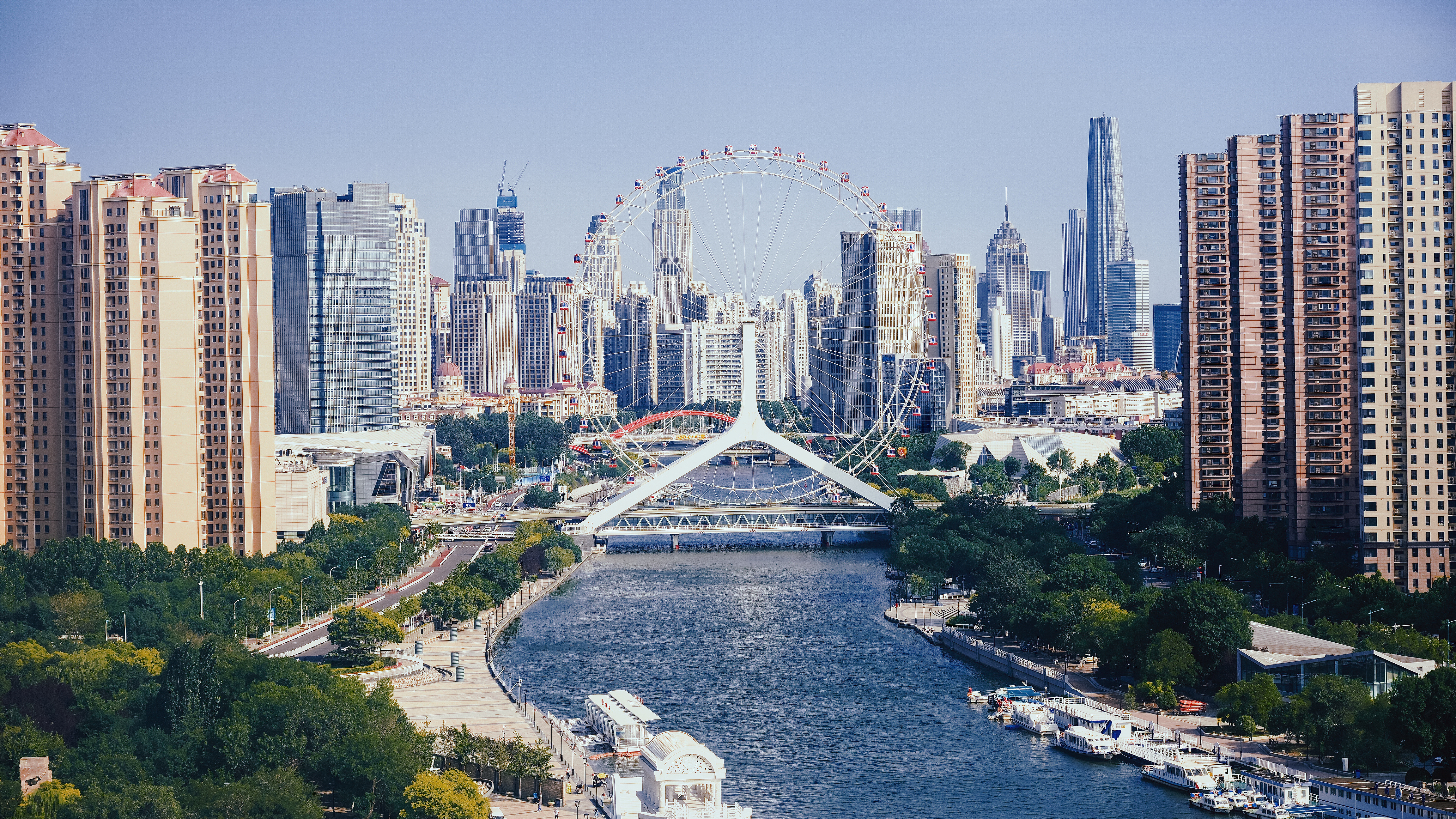
The city’s architecture serves as a tangible record of its turbulent past. Following the 1860 opening of its ports, Tianjin saw the rise of European-style neighborhoods and tree-lined avenues that persist today alongside traditional structures. A nighttime cruise along the Haihe River highlights this contrast, illuminating a skyline where Western facades and Chinese architecture reflect off the water.
Beyond the city center, the Binhai New Area showcases a contemporary coastal identity. Attractions like the TEDA Aircraft Carrier Theme Park and the National Maritime Museum of China draw visitors to the shoreline, while the Ancient Culture Street offers a window into heritage. Here, artisans continue to produce Yangliuqing New Year paintings and Niren Zhang clay figurines, keeping centuries-old skills alive.
Local culinary traditions remain anchored in the city’s geography. While the Binhai coast provides fresh seafood like mantis shrimp potstickers, the streets are defined by the jianbing guozi. This savory, crispy pancake represents the daily rhythm of life in Tianjin, bridging the gap between the city’s historical narrative and its status as a modern, accessible travel destination.
Comments (0)
No comments yet. Be the first!