
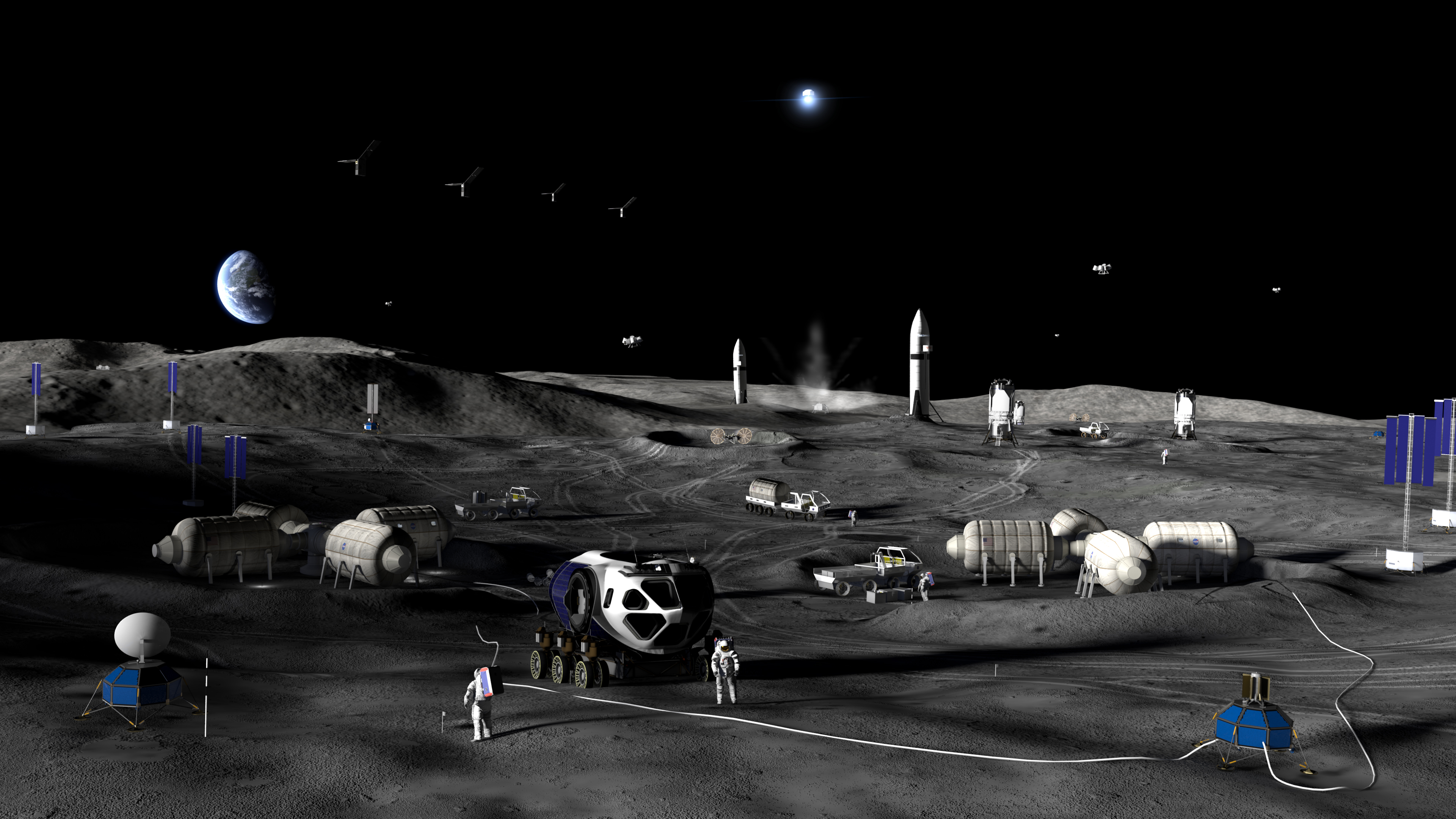
NASA’s strategy hinges on a multi-pronged approach involving robotic landers, hopping drones, and advanced surface vehicles. Collaborating with private sector partners including SpaceX, Blue Origin, Astrobotic, and Intuitive Machines, the agency plans 25 launches to deliver four metric tonnes of cargo by 2029. The ultimate objective is to deploy fission reactors and solar arrays at the Moon’s South Pole, where frozen water could provide essential oxygen and hydration for semi-permanent crews.
Skeptics argue the timeline may be overly ambitious. Simeon Barber of the Open University warns that political pressure often outpaces technical readiness, noting that China’s steady progress in low-Earth orbit and successful robotic recovery of far-side lunar samples suggest Beijing could reach the surface first. China, which aims for a human landing by 2030 followed by a joint base with Russia by 2035, is currently prioritizing safety and long-term physiological data. Beijing’s recent experiments with stem cell-based artificial embryos on the Tiangong space station highlight a rigorous commitment to understanding the biological constraints of extended space life. As both superpowers pivot toward lunar colonization, the mission is shifting from mere exploration to the establishment of resource-extracting infrastructure.
Comments (0)
No comments yet. Be the first!