
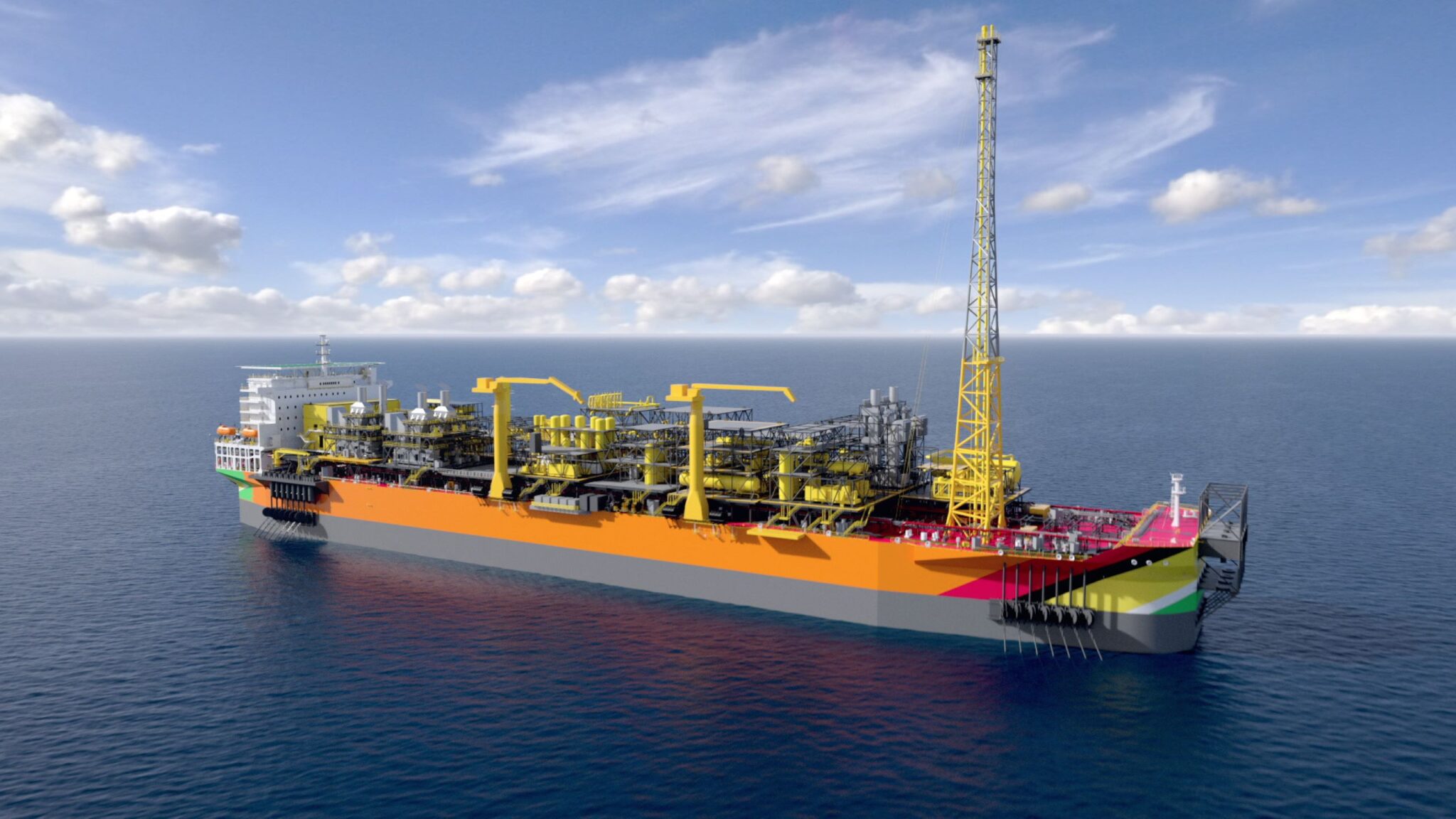
Guyana began producing oil in December 2019, after the Liza-1 offshore discovery in 2015. Its output has since made it South America’s third-largest oil producer. Production is expected to reach around 2 million barrels of oil equivalent per day by the end of the decade, as new projects in the Stabroek Block come online.
The block holds an estimated 11 billion barrels of recoverable oil and gas resources. ExxonMobil operates it with a 45% working interest; Chevron holds 30% and CNOOC 25%. More than 35 high-quality discoveries have been made there. Four floating production, storage and offloading vessels are operating, with the One Guyana facility at Yellowtail gradually increasing output after starting up in August 2025.
The Errea Wittu arrived in Guyana in late August 2026 and is scheduled to begin production at the $12.7 billion Uaru project before the end of the year. Its 10 drill centers and 44 production and injection wells will target a resource of more than 800 million barrels. The facility is designed to add 250,000 barrels per day, potentially lifting national output to as much as 1.2 million barrels daily.
Further projects—Whiptail, Hammerhead, Longtail and Haimara—are scheduled to start between late 2026 and 2031. Together, they are expected to add 650,000 barrels of crude oil, 510,000 barrels of condensate and 3 billion cubic feet of natural gas per day. Exxon also announced a Rockhead-1 discovery in early October 2026, about 115 nautical miles offshore and near the 2018 Ranger-1 discovery.
The article says Guyana’s rising exports could offer an alternative supply to countries affected by Middle East disruptions. About 60% of its oil shipments go to Europe and one-third to the United States; U.S. imports have risen significantly since 2021. Georgetown reported that oil exports in the first half of 2026 increased 82% to more than $15 billion. It forecasts annual petroleum revenues of nearly $6.5 billion, while the IMF projects GDP growth of 22.3% in 2026. Since oil production began, GDP has grown nearly eightfold to about $40 billion, according to the article.
Comments (0)
No comments yet. Be the first!