
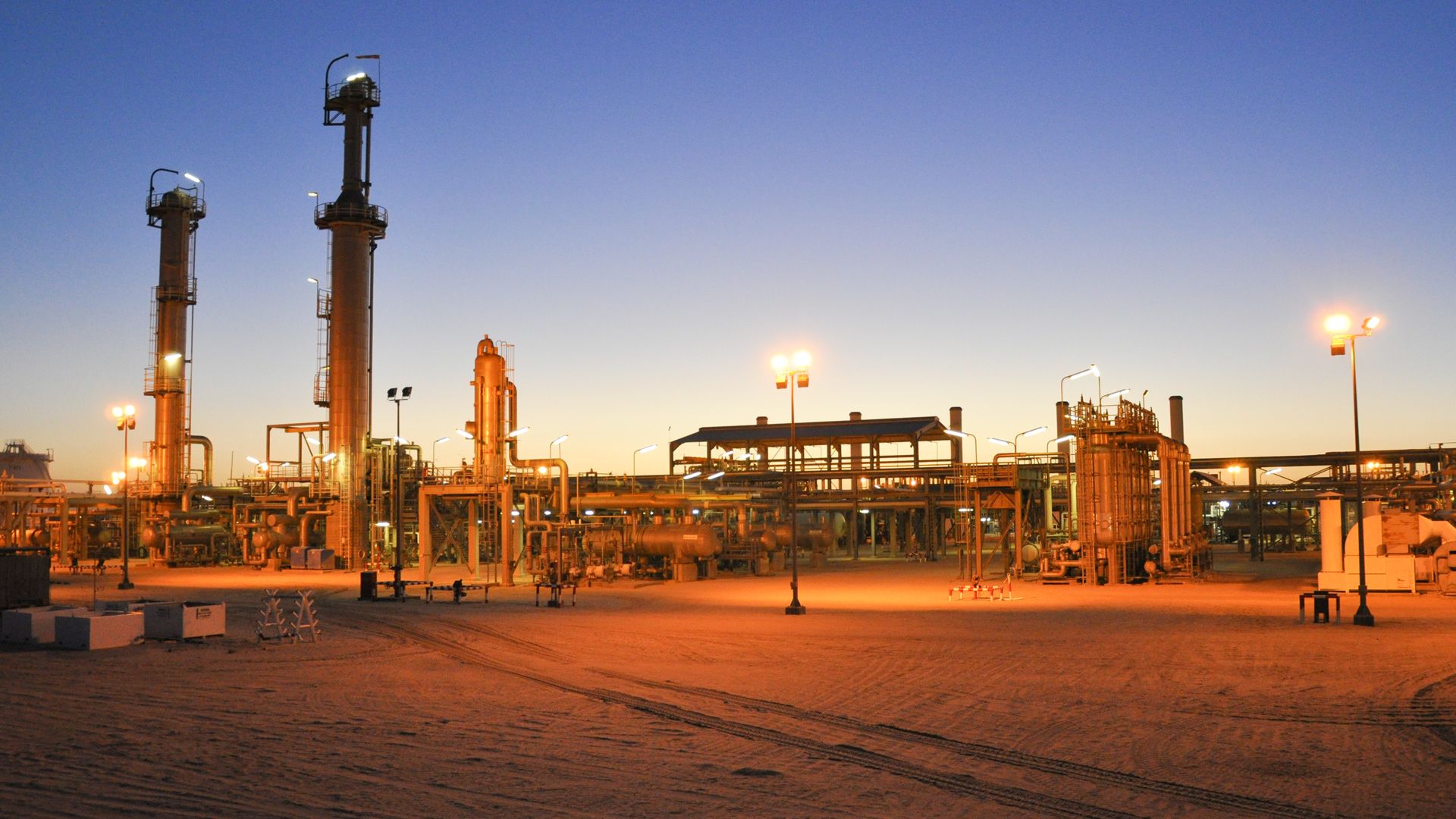
After Russia’s invasion of Ukraine on 24 February 2022 disrupted energy markets and prompted Western governments to seek alternative supplies, investment helped lift Libyan production to a 13-year high of 1.4–1.5 million barrels per day (bpd). But the February 2026 licensing round, the first since 2007, offered little evidence of sustained new interest: only five of 22 blocks were awarded, despite 37 companies pre-qualifying. More than 75 percent of the blocks remained unsold.
The awards went to a mix of established players and new entrants. Repsol, Turkey’s TPAO and Hungary’s MOL won Offshore Block 22 in the Sirte Basin; Italy’s Eni and QatarEnergy took Offshore Area 01; U.S. firm Chevron received Onshore Contract Area 106; Repsol and TPAO won onshore area C3; and Nigeria’s Aiteo Group secured Onshore M1 in the Murzuq Basin. Eni and Repsol already have substantial Libyan interests, while Chevron’s single block may signal only a limited initial commitment, the article argues.
The NOC has discussed second-quarter 2027 exploration plans for Block 22 with Repsol, TPAO and MOL. Because the site is ultra-deepwater, first oil could take six to 10 years. Any nearer-term increase toward the NOC’s long-term target of 2.1 million bpd would depend on restoring mature onshore fields, including Sharara, El Feel and Waha, as well as brownfield areas in the Sirte Basin.
Revenue disputes and insecurity deter investment
Libya’s oil potential is substantial. Before Muammar Gaddafi was removed in 2011, the country produced roughly 1.65 million bpd; output had risen from about 1.4 million bpd in 2000. The NOC had estimated that enhanced oil recovery could add around 775,000 bpd of capacity. But competing authorities, armed groups and regional powerbrokers have repeatedly challenged how oil income should be distributed.
A 2020 peace agreement envisaged a joint technical committee to oversee revenues and help establish a unified budget. The committee never became operational, and disputes contributed to renewed blockades, including in 2022 and 2024. Libya signed its first unified national budget in 13 years on 11 April 2026 under U.S. mediation, but the oversight dispute remained unresolved. A leaked March/April 2026 UN Security Council Panel of Experts report said Arkenu Oil Company, linked to LNA Deputy Commander-in-Chief Saddam Haftar, diverted more than USD3 billion in oil revenues outside Central Bank of Libya oversight between October 2024 and February 2026.
Tensions over revenue transfers have also persisted. In mid-October 2026, the central bank said it had received USD361 million in oil revenue for the first half of the month, USD839 million less than the NOC’s reported transfer of USD1.2 billion. A 21–27 September blockade at Sharara’s Valve 7, involving an armed group backed by members of the Petroleum Facilities Guard (Southwest), cut the field’s daily output by around 200,000 bpd. The shutdown cost about 950,000 barrels of production and an estimated USD95 million in direct revenue.
Comments (0)
No comments yet. Be the first!