
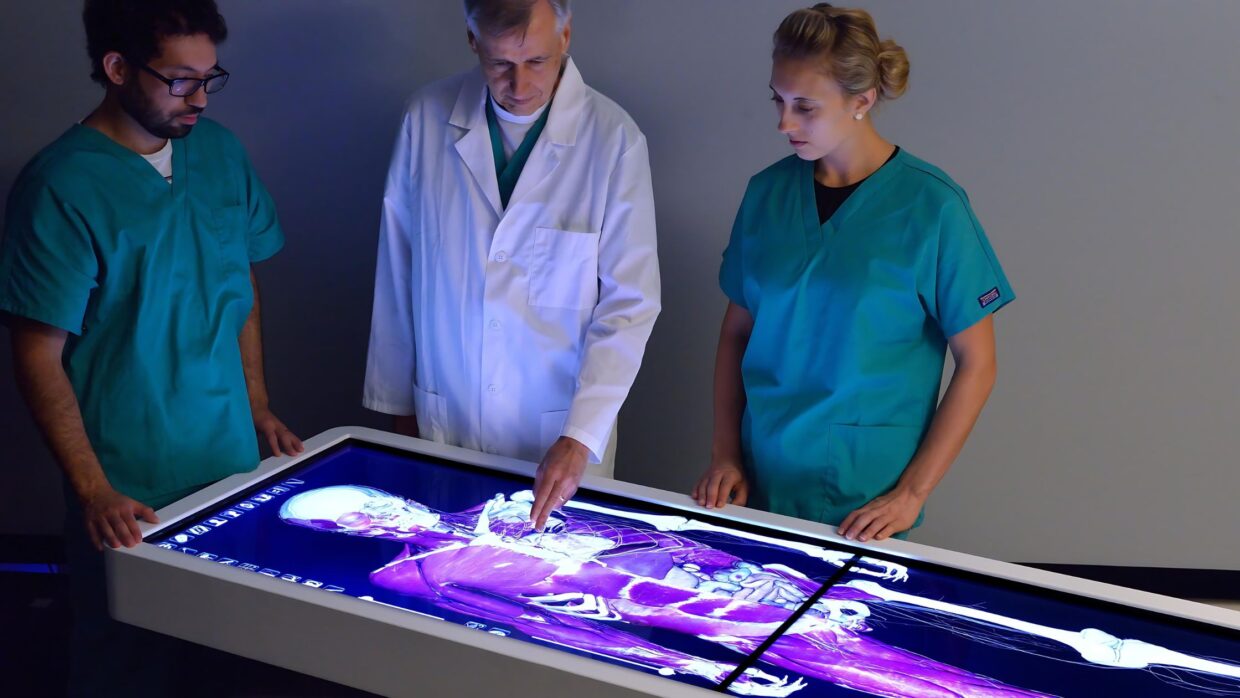
The Table 13 update introduces two reference bodies classified under Class I and Class III obesity, mapped to WHO and CDC standards. These models move beyond surface-level representations, illustrating internal changes such as muscle hypertrophy, myosteatosis, and organ compression caused by visceral fat accumulation. Researchers and students can now observe the systemic impact of metabolic dysfunction-associated steatotic liver disease and polyendocrine metabolic ovarian syndrome within a full-body, 3D environment.
Beyond obesity studies, the update expands the platform's functional physiology capabilities. New simulations allow for the examination of swallowing mechanics and sleep cycles, including the visual airway collapse associated with obstructive sleep apnea. These modules link anatomical structures to clinical diagnostic tools like video fluoroscopy, providing a more cohesive training experience. The release also adds nearly 200 histology slides, enhanced ultrasound simulations, and HiP-CT imaging scans, all accessible to current users at no additional cost.
Comments (0)
No comments yet. Be the first!