
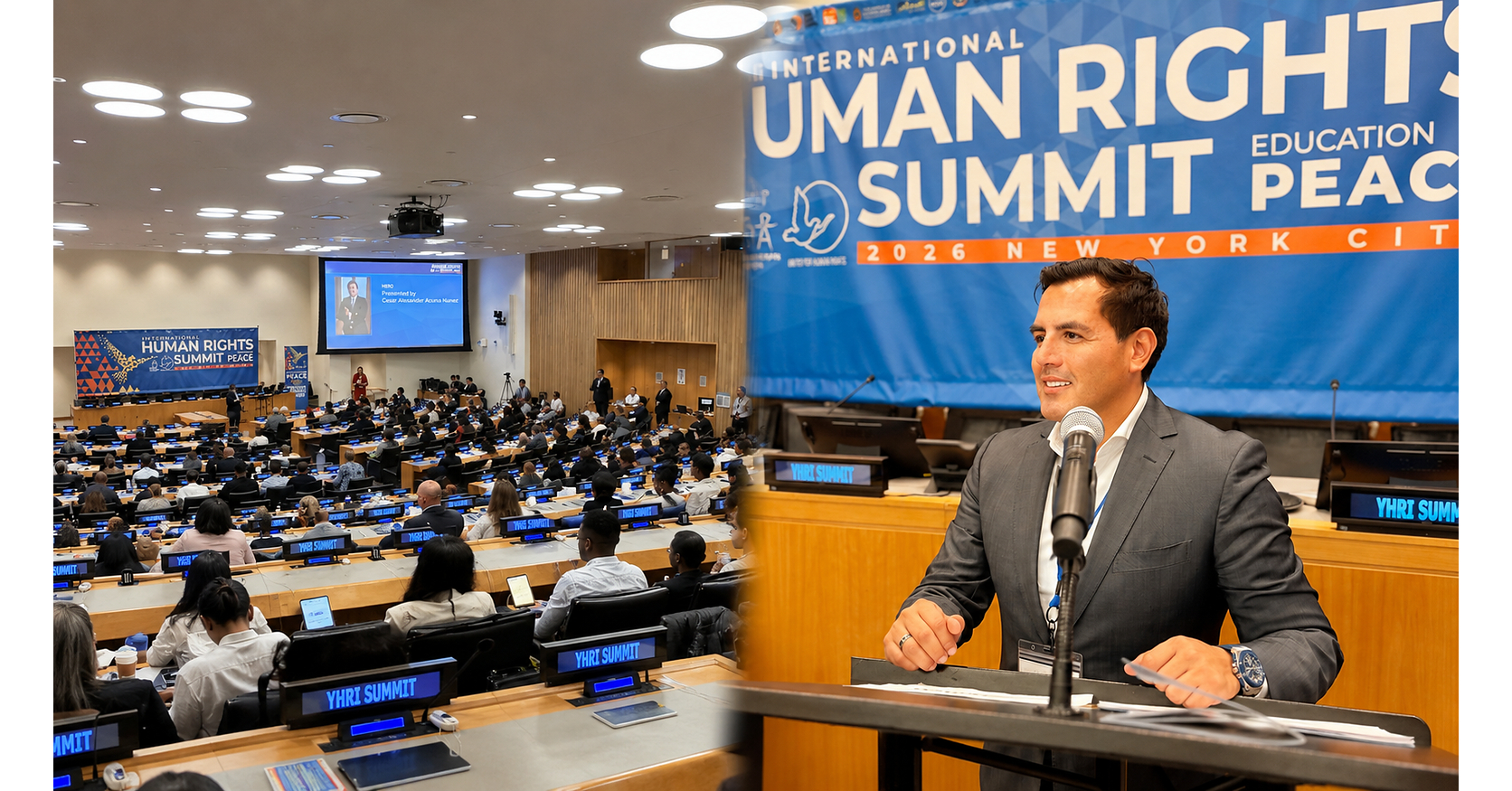
The summit, which marked the 25th anniversary of Youth for Human Rights International, drew delegates from 82 nations to discuss the intersection of peace and modern technology. Acuña Núñez stressed that while artificial intelligence is rapidly reshaping the global workforce, its true value lies in its potential to democratize opportunities for historically underserved populations. He contended that ethical implementation and inclusive access are the only ways to ensure technological progress does not exacerbate existing societal divides.
His appearance at the United Nations follows a strategic shift toward integrating high-level digital infrastructure into academic models. Having represented his institution at HPE Discover in Las Vegas last year, Acuña Núñez is currently focused on launching initiatives tailored to the U.S. market. These upcoming programs aim to leverage digital education to support Hispanic communities and enhance professional mobility, building on his work at César Vallejo University—a system that currently serves over 260,000 students across Peru. For the executive, the goal is to turn the digital transformation into a catalyst for social mobility, ensuring that the right to learn keeps pace with the evolution of the global economy.
Comments (0)
No comments yet. Be the first!