
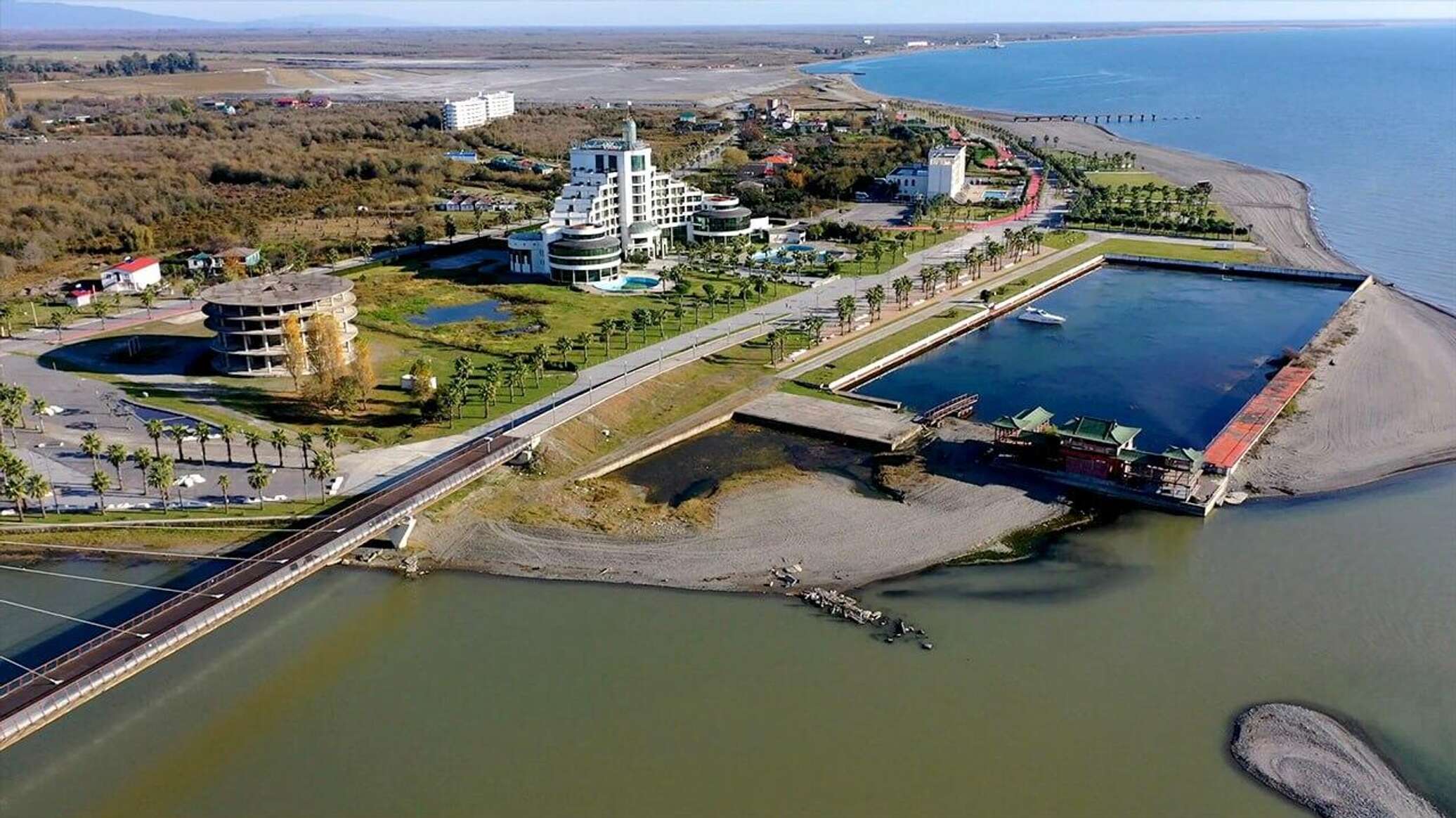
Economy Minister Mariam Kvrivishvili announced that the state will retain ownership of the port’s core infrastructure under a new landlord model. By moving away from a single partner, the government aims to court multiple international investors simultaneously to secure cargo flow. The decision effectively formalizes the exit of the China Communications Construction Company and its Singapore-registered subsidiary, which held a 49 percent stake as recently as 2024.
Tbilisi is pushing to have the port’s first phase operational by 2029, though it has yet to secure firm commitments from new backers. While officials emphasize the site's role in the Middle Corridor—a trade route connecting Asia and Europe—the lack of Western investment remains a glaring gap. The government plans to pour $7 billion into transport infrastructure by 2032, covering rail modernization and highway networks alongside the port.
Critics view the pivot as a tactical effort by the Georgian Dream party to reclaim influence. By maintaining full control, the state hopes to balance its regional logistics goals with the need to mend relations with Western partners following years of political friction. Whether this state-centric approach can attract the necessary capital to turn a profit remains the project's primary hurdle.
Comments (0)
No comments yet. Be the first!