
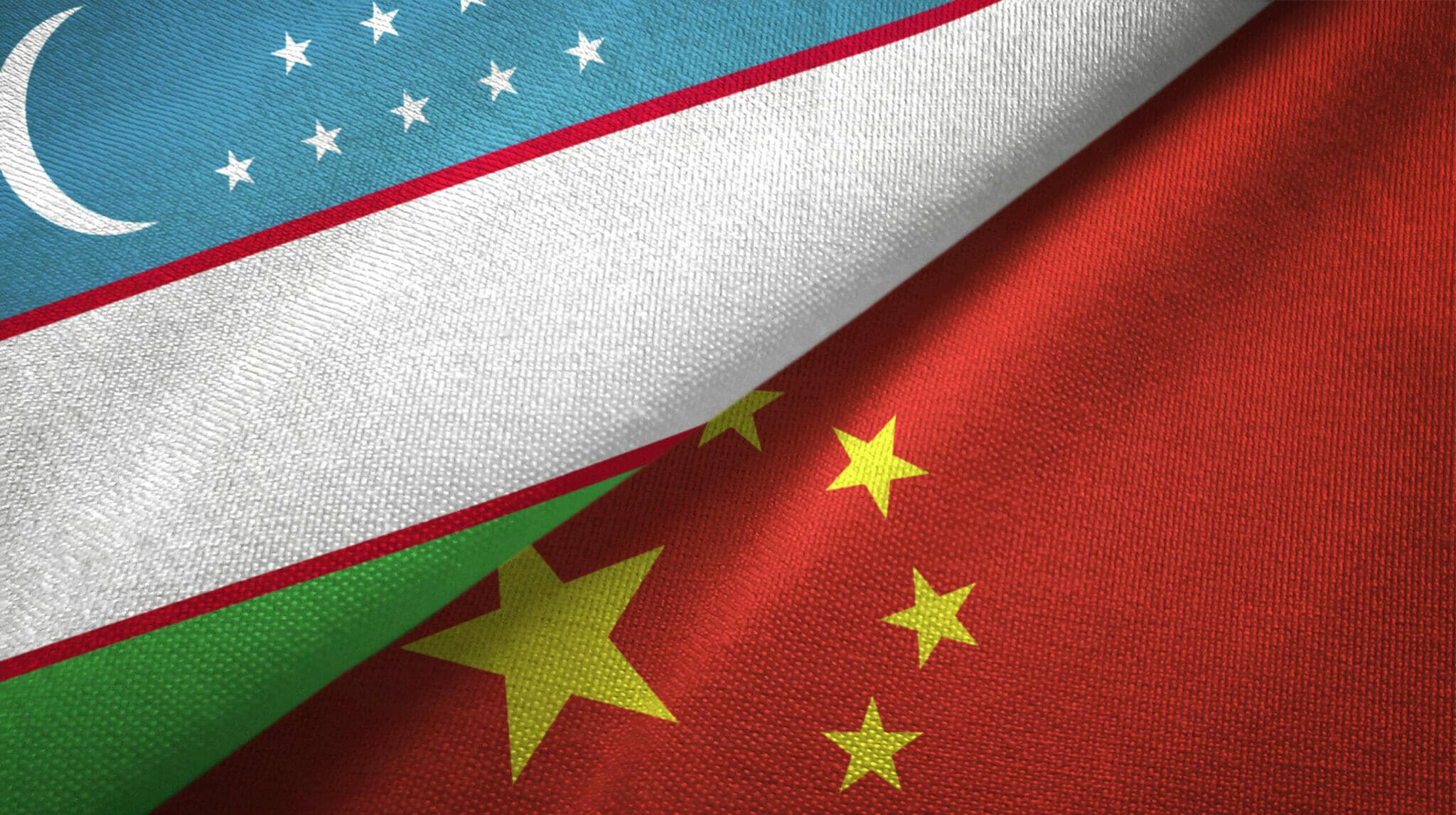
The content covered political, economic, cultural and social relations, featuring Chinese and Uzbek officials, entrepreneurs, scholars, artists and others. It pitched China as a place for Uzbeks to do business, work, study and travel, and even find a marriage partner. One segment covered the launch of a Chinese edition of Uzbek President Shavkat Mirziyoyev’s book on Uzbekistan’s development.
CGTN, which is operated by the Chinese Communist Party’s Central Propaganda Department, had previously published or broadcast only a few items about Uzbekistan each month. Eurasianet described the late-October and early-November output as a major escalation in Beijing’s information campaign.
The apparent prompt was US Secretary Marco Rubio’s October visit to Samarkand with a delegation of American business executives. Rubio held talks with the foreign ministers of all five Central Asian states, advancing efforts to develop a US-supported trans-Caspian trade network. A trade fair alongside the meetings reportedly produced more than 50 deals between US companies and Uzbek entities, valued at up to $12 billion.
“The United States wants to be a strong partner in Central Asia, obviously rooted in this country, but also all the neighboring countries who want to do more business and trade with us,” Rubio said at a news conference on Samarkand’s Registan Square. The meetings reportedly generated broad enthusiasm among Uzbek leaders for closer US-Uzbek ties.
A day before Rubio arrived, Chinese Premier Li Qiang visited Tashkent and met Mirziyoyev. A Chinese Foreign Ministry statement quoted Li as saying China was ready to strengthen strategic communication, support each other’s core interests and expand mutually beneficial cooperation with Uzbekistan.
Comments (0)
No comments yet. Be the first!