
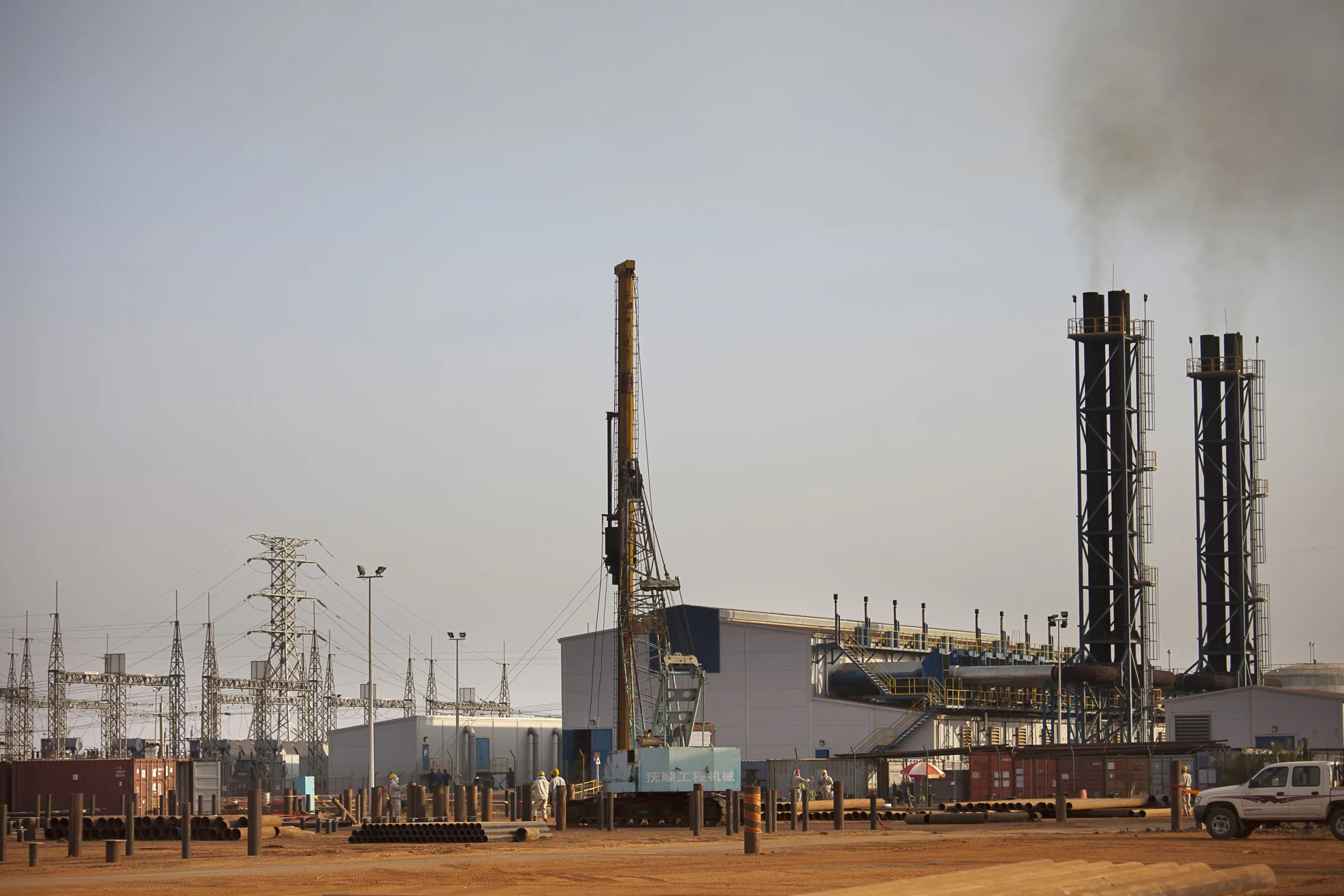
The government-backed South Sudan Oil & Power conference in Juba at the end of the month will present the opportunity to investors. Organizers put current output at 170,000 barrels per day (bpd) and call 230,000 bpd a short-term target. A petroleum ministry official reported 175,000 bpd in August, while setting a lower goal of 200,000 bpd by August 2027.
Available export figures do not settle the gap between production and shipments. Tanker tracking recorded eight cargoes carrying 4.8 million barrels from Sudan’s two Red Sea terminals in October, equivalent to combined Sudanese and South Sudanese exports of 155,000 bpd. Sudan Tribune reported that the Heglig fields produced about 26,000 bpd in September, all for export. Public data offer no current breakdown by country or reconciliation with South Sudan’s reported wellhead output.
The investment pitch coincides with the launch of the Africa Energy Bank. Afreximbank and the African Petroleum Producers’ Organisation formally established the bank in Abuja on October 31 with $5 billion in authorized capital. APPO Secretary-General Farid Ghezali said it had raised $500 million for deployment and would begin making investment decisions. New funding could support production in South Sudan, but it cannot guarantee a route to market.
Crude from Blocks 1, 2 and 4 enters the Greater Nile pipeline through Heglig in West Kordofan. The RSF displaced the Sudanese Army there in December 2025. Under a tripartite agreement, the South Sudan People’s Defence Forces provide security inside the complex. South Sudanese troops guard the installation, while the RSF controls surrounding territory and the army holds the Red Sea terminals.
A September report citing unnamed oil-industry sources said Juba pays the RSF $4 of the $11 charged for each South Sudanese barrel crossing RSF-controlled territory, with the remaining $7 going to the army-aligned government. South Sudan has previously settled pipeline obligations with crude, but no published account specifies whether the RSF’s current share is paid in oil, cash or export proceeds. Janes assesses that Sudanese processing and transit fees help fund army operations; the RSF receives payment for allowing crude through its territory.
The Petrodar pipeline, carrying Dar Blend from Blocks 3 and 7 at Paloch to the Bashair terminal, avoids Heglig but remains exposed to the war. A February 2024 rupture cut exports by roughly two-thirds and lowered production from about 150,000 bpd to 62,000 bpd. Fighting blocked repairs and interrupted diesel deliveries needed to heat the waxy crude. Full flows resumed in April 2025, followed by repeated drone attacks on Sudanese oil installations.
The shutdown contributed to an estimated 24% contraction in South Sudan’s economy in fiscal 2025. Oil generated 89% of budget-available government revenue in 2024 and nearly all export earnings from 2021 to 2024. Halting exports would cut income for Sudan’s forces, but only after stripping Juba of most of its own revenue.
A proposed 350-kilometer Tharjiath-Paloch pipeline would divert Block 5A crude from its current Heglig connection into Petrodar, exchanging RSF-controlled territory for another route across Sudan to an army-held port. The World Bank says proposed pipelines to Kenya or Djibouti would be costly and need a larger, sustained production base to be viable.
At about 170,000 bpd, the petroleum ministry’s estimated annual decline rate of 20% would remove roughly 34,000 bpd, or 12.4 million barrels over a year. Reaching 230,000 bpd within that period would mean replacing those declining barrels and adding 60,000 bpd—a gross increase of about 94,000 bpd. Any additional oil would still have to use one of the two routes through Sudan.
Comments (0)
No comments yet. Be the first!