
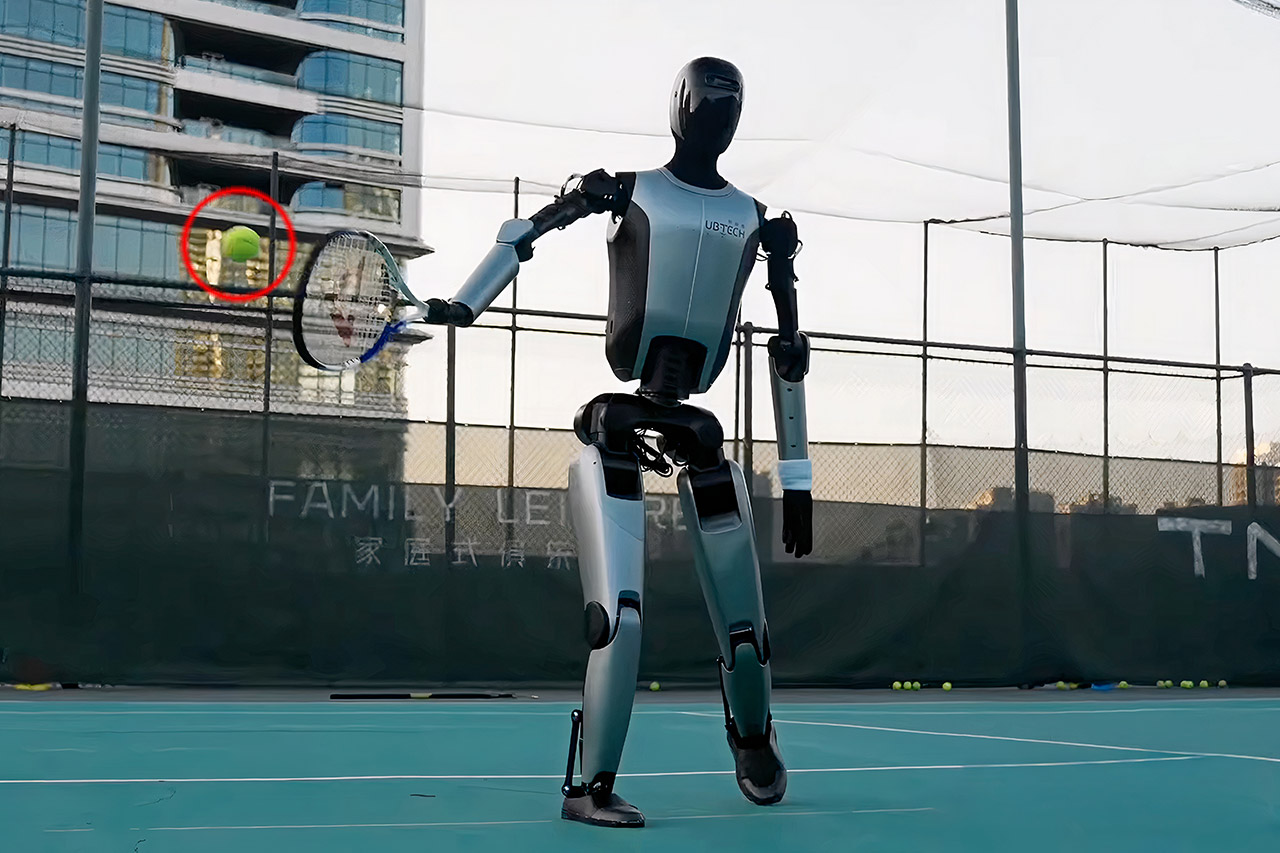
The demonstration moved beyond scripted maneuvers, requiring the machines to track high-speed balls, adjust positioning, and coordinate complex movements like serves and recovery shots. Unlike laboratory simulations, the robots operated in a live sports environment, adjusting their strategies based on the unpredictable dynamics of the match. In doubles play, the units partnered with human champions, proving an ability to collaborate and adapt to a teammate’s performance in real time.
This shift represents a fundamental evolution in robotics. Where previous breakthroughs focused on static tasks, the AstraTennis milestone highlights a machine's capacity to perceive and act within the physical world. Even when balance was disrupted during intense exchanges, the robots demonstrated immediate recovery, maintaining their competitive stance. By integrating visual perception with motor control, the Galbots demonstrated that AI is no longer confined to virtual decision-making but is capable of navigating the complexities of human physical interaction.
Comments (0)
No comments yet. Be the first!