
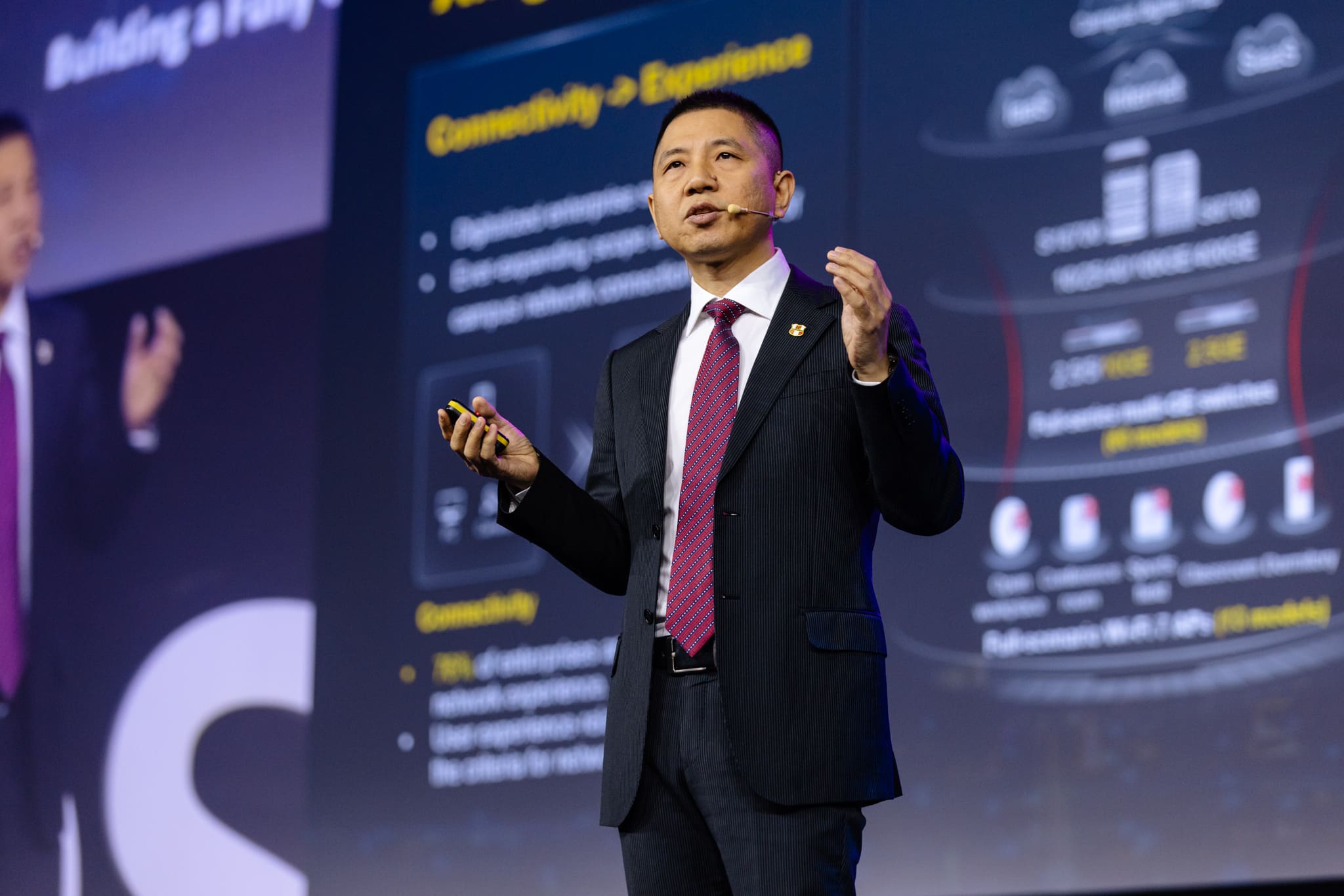
The rapid proliferation of AI agents in production environments has rendered traditional network infrastructure inadequate, prompting Huawei to rethink its data communication strategy. Leon Wang, President of Huawei's Data Communication Product Line, identified four critical pillars for this evolution: lossless compute for power efficiency, integrated sensing for AI perception, comprehensive security against evolving threats, and network autonomy for service reliability.
Enterprises currently face significant hurdles, including the widening gap between computing supply and demand, shifting traffic patterns, and increased operational complexity. Arthur Wang, Vice President of the company's Data Communication Product Line, emphasized that the upgraded Xinghe solution expands AI integration beyond basic maintenance into the entire network, while shifting security from single-point defense to end-to-end protection.
To broaden access to these capabilities, Huawei introduced the Xinghe AI CloudCampus SaaS Service Platform. Shi Lei, Vice President of the NCE Data Communication Domain, noted that this platform allows small and medium-sized enterprises to utilize intelligent operations tools that were previously reserved for large corporations. By offering these features as a cloud service, Huawei aims to make advanced network management both affordable and actionable for a wider range of regional businesses.
Comments (0)
No comments yet. Be the first!